A new home should feel considered from the moment you arrive: the proportions of the street, the materials beneath your hand, the view from the kitchen window and the ease of everyday life nearby. The right questions to ask a housebuilder help you look beyond a well-presented show home and understand exactly what is being offered, when it will be ready and how it will perform for years to come.
For buyers choosing a home in Northumberland, the conversation should extend beyond bedroom numbers and square footage. Whether you are considering a village family house, a town-centre flat or a heritage conversion close to the coast, a thoughtful developer should be able to speak clearly about its design, construction, surroundings and aftercare.

Questions to ask a housebuilder about the home
What is included in the purchase price?
Ask for a detailed schedule of what is included as standard, rather than relying on show-home finishes. Kitchen appliances, flooring, tiling, wardrobes, turf, fencing, external lighting and electric vehicle charging points can vary between developments and house types.
This is also the time to ask which features shown in marketing imagery are upgrades. A carefully designed home may have generous specifications as standard, but clarity avoids unwelcome decisions and additional costs later in the buying process.
Can I see the plans, dimensions and orientation?
Request the floor plan, room dimensions, site plan and the orientation of the property. Consider how you will use each room rather than simply whether it looks spacious when empty. Will a dining table sit comfortably alongside a busy family kitchen? Is there useful storage for coats, boots and outdoor equipment? Where will the morning and evening light fall?
In Northumberland, aspect can make a meaningful difference. A south-facing garden may be particularly appealing, while a home positioned to frame countryside, village or coastal views may offer a stronger connection to its setting.
What materials and construction methods are being used?
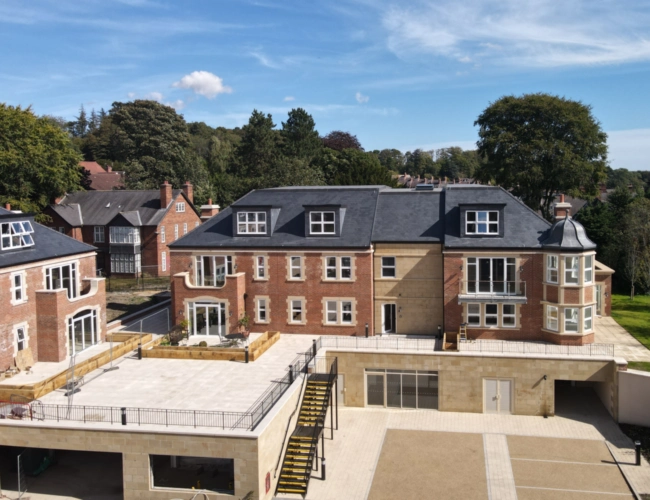
A home’s appearance matters, but so does the quality behind its exterior. Ask what the walls, roof, windows and external finishes are made from, and why those materials have been selected. Stone-built details, sympathetic rooflines and carefully chosen brickwork can help a new development sit naturally within an established Northumbrian town or village.
There is a practical element too. Understand the expected maintenance requirements of timber cladding, stone, render or composite materials. Traditional character and contemporary performance should work together, not create uncertainty for the homeowner.
How energy efficient is the property?
Ask for the Energy Performance Certificate rating and details of the heating, hot water, ventilation and insulation systems. Find out whether the home has underfloor heating, an air source heat pump, solar panels, mechanical ventilation or a conventional boiler, and ask how each system is intended to operate.
Efficiency is not only about lower running costs. It affects comfort, condensation management and how the home feels through a Northumbrian winter. Request realistic guidance on anticipated energy use, while recognising that household size and lifestyle will influence actual bills.
What choices can I make before completion?
Some buyers value the opportunity to personalise a kitchen, bathroom tiles, flooring or electrical layout. Others prefer a home that has been fully specified by the developer. Ask which choices are available, the deadline for making them and whether changes carry an additional charge.
The answer often depends on the build stage. A home reserved early may allow greater flexibility, whereas a completed property may be ready for a more immediate move. Neither route is inherently better - it comes down to whether you value choice, certainty or speed.
Questions about the development and its setting
What will the finished development look like?
Ask to see the approved site layout and the phasing plan. Establish how many homes are planned, where roads, parking, landscaping and communal areas will sit, and what construction activity may remain after you move in.
A smaller collection of homes can offer a quieter setting and a more established sense of place, while a larger scheme may bring broader amenities or a longer construction period. It is worth understanding the trade-off before reserving.
Are there any future building plans nearby?
Your developer can explain the land within its own control, but you should also ask about known planning proposals in the immediate area. A view across open land today may not be permanent, and neighbouring sites can affect traffic, noise and the character of the locality.
This question is particularly relevant on the edge of villages and towns, where the relationship between new homes, fields and existing communities is central to the appeal of the location.
Who will maintain the roads, green spaces and shared areas?
Clarify whether roads and footpaths will be adopted by the local authority, and who will care for landscaping, drainage features, private courtyards or communal spaces in the meantime. If there is a management company, ask for the anticipated annual charge, what it covers and how costs may be reviewed.
For flats, this should include lifts, hallways, roofs, bin stores and any shared gardens or parking areas. A service charge is not automatically a disadvantage, but it should be transparent and proportionate to the facilities provided.
What are the parking and charging arrangements?
Ask how many allocated spaces come with the property, where visitor parking is located and whether garages are included in the title. If you have an electric vehicle, confirm whether a charging point is fitted, its specification and whether it is connected and ready for use.
Consider daily routines as well. A beautiful home should make it easy to unload shopping, accommodate visitors and leave room for bicycles, prams or outdoor equipment.
Questions about cost, timing and the buying process
What is the reservation process?
Ask how much the reservation fee is, how long it holds the property and under what circumstances it is refundable. You should also understand the anticipated timescale for exchanging contracts and completing the purchase.
A reservation agreement should set out the essentials clearly. If you are selling an existing home, using a mortgage or coordinating a move from further afield, tell the sales team early so that the proposed timetable can be discussed realistically.
Are there any costs beyond the purchase price?
Ask about service charges, estate charges, ground rent where applicable, parking permits, connection fees and any likely costs for optional upgrades. Your solicitor will investigate legal matters in detail, but an open early conversation helps you compare homes on a like-for-like basis.
It is also sensible to budget for removals, window dressings, furniture and the practical details that make a new property feel settled. A freshly completed home may need less immediate work than an older property, but it will still benefit from a considered moving budget.
When will the home be ready?
For an off-plan purchase, completion dates are usually estimates until the property is close to being finished. Ask for the current build stage, the expected completion window and how updates will be communicated. Weather, supply chains and final inspections can affect timing, particularly on smaller, carefully phased developments.
A good housebuilder will be candid about what is confirmed and what remains subject to construction progress. Certainty matters, but honest communication matters just as much.
Can I visit during construction?
Ask whether accompanied visits can be arranged at key stages. Safety rules will limit access, but a guided visit can be valuable for seeing room proportions, asking practical questions and following the progress of the home you have chosen.
It may also be useful to ask what happens before handover. Find out whether there will be a formal demonstration of the heating controls, appliances, ventilation and security systems, and whether you will have an opportunity to identify any snagging items before completion.
Questions about quality and aftercare
What warranty and guarantees come with the home?
Ask which new-home warranty provider is used, how long the cover lasts and what is protected at each stage. Request details of manufacturer guarantees for appliances, boilers, windows, doors and renewable technology too.
Warranties provide valuable reassurance, but they are not a substitute for understanding the housebuilder’s own approach to customer care. Ask who to contact after completion and how defects are logged, assessed and resolved.
What checks are completed before handover?
A finished home should have undergone inspections throughout construction and a final quality check before you receive the keys. Ask about the process for testing electrics, plumbing, heating, drainage, windows and doors.
You might also ask whether the developer uses an independent inspection process. The purpose is not to assume a problem, but to understand the standard of care applied to details that are not always visible on a viewing.
Can I speak to existing homeowners or visit another completed development?
A housebuilder’s completed work says more than a brochure can. If possible, visit another scheme by the same developer to see how materials have weathered, how landscaped areas have matured and how the homes sit within their surroundings.
Not every buyer will be able to speak with residents, and privacy should always be respected. Even so, asking to see established examples of a developer’s work can offer helpful perspective on its long-term approach to design and place.
How does the design respond to Northumberland?
This is the question that separates a generic new build from a home with a real sense of belonging. Ask how the architecture takes its cue from local streetscapes, historic buildings, village character or the surrounding landscape. The answer should be specific: material choices, scale, roof forms, landscaping and the treatment of boundaries all matter.
At Ida Homes, this connection is fundamental. Contemporary layouts and efficient technology have their place, but they are at their best when paired with the enduring character that makes Northumberland such an exceptional place to live.
A reservation is a significant commitment, so take your time, keep notes and ask for answers in writing where details affect your decision. The right home should offer more than a compelling first impression: it should give you confidence in every practical detail, and a lasting sense that it was designed for its particular place.