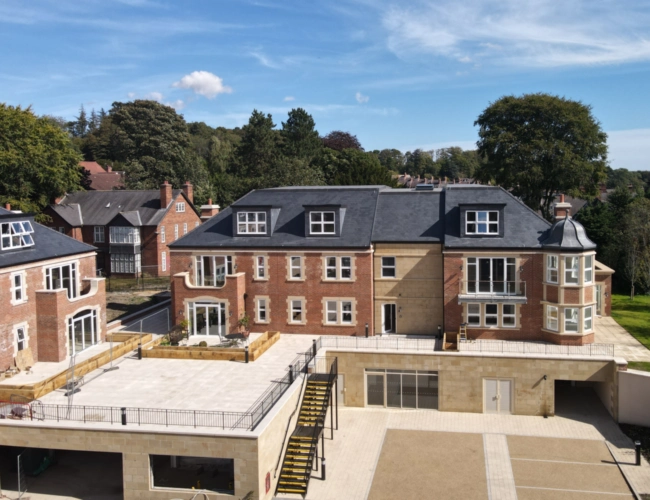

The decision to leave London often begins with a practical question - what could everyday life look like with more space, a shorter walk to the countryside and a home designed for the years ahead? For those moving to Northumberland from London, the answer can be remarkably compelling. Yet this is not simply a change of postcode. It is a move towards a different pace, a different relationship with place and, in many cases, a more considered idea of home.
Northumberland offers the rare combination of open landscapes and well-connected market towns, historic villages and a coastline of exceptional character. From the convenience of Morpeth to the coastal atmosphere of Bamburgh and the welcoming community of Belford, the county provides options for professionals, families, downsizers and those seeking a more permanent escape from the capital.

Moving to Northumberland from London: what changes?
The most immediate difference is space. London buyers are accustomed to making careful compromises between location, square footage and outdoor amenity. In Northumberland, a comparable budget may open up the possibility of an additional bedroom, a private garden, dedicated parking or a more generous kitchen and living area. For many, this changes the rhythm of daily life: working from home becomes more comfortable, visiting family is easier and weekends need not be organised around leaving the city.
Space alone is not the whole story. Northumberland rewards those who value its particular character. The county is shaped by stone villages, sweeping farmland, dramatic castles and a coast that feels wonderfully unhurried even in the height of summer. A home here can offer contemporary standards of comfort while still belonging to its setting, rather than appearing disconnected from it.
There are trade-offs, of course. London places theatres, restaurants, specialist shops and transport at close quarters. Northumberland offers a more selective, locally rooted version of those conveniences. Independent cafés, pubs, farm shops and community events play a larger role, while larger retail and cultural choices may involve a journey to Newcastle or another nearby town. The appeal lies in deciding which sort of access matters most to you.
Choose a location around your real routine
Northumberland is a large county, and the right place depends less on a postcard view than on how you expect to live from Monday to Friday. Before focusing on a particular property, consider the journeys you will make most often: the school run, rail travel, commuting days, shopping, healthcare appointments and seeing friends or family.
Morpeth for town-centre convenience
Morpeth is often a natural starting point for London buyers who want to remain connected. It has a handsome historic centre, everyday shops, places to eat and a railway station with services towards Newcastle, Edinburgh and beyond. Its position also makes it a practical choice for those who still travel south regularly, whether for work or to visit family.
Living close to the centre can suit buyers who want a lower-maintenance home without losing the advantages of a lively market town. A thoughtfully designed two- or three-bedroom flat, for example, can provide the ease of a lock-up-and-leave property with restaurants, riverside walks and amenities close at hand. It may be especially appealing to downsizers or couples exchanging a London flat for a more generous and refined base.
Belford for village life with room to grow
For families and buyers seeking a stronger sense of rural community, Belford offers a different proposition. Set between Alnwick and Berwick-upon-Tweed, it provides access to the coast, countryside and major road connections while retaining the scale and warmth of a Northumbrian village.
A family house here can offer the breathing room that is increasingly difficult to find in London: space for children, guests, hobbies and home working, alongside an outdoor setting that encourages time away from screens. The question is whether you are ready to exchange immediate urban choice for a closer-knit local rhythm. For many households, that is precisely the point of the move.
Bamburgh and the coast for a lasting change of scene
Northumberland's coast has an enduring pull, particularly around Bamburgh. There is a distinction, however, between enjoying the coast on holiday and making it part of everyday life. Winter walks, changing skies and quieter village streets are as much a part of the experience as summer beach days.
A home near the coast can be an exceptional primary residence or a considered second home, but buyers should be realistic about seasonal activity, travel times and the services they need close by. The reward is an extraordinary setting with a profound sense of permanence, especially where historic buildings are restored with care and adapted for contemporary living.
Think beyond the asking price
A move from London can release capital, but it is wise not to judge value by bedroom numbers alone. The quality of the build, the orientation of the home, storage, energy efficiency, parking and outdoor space all shape how a property performs over time. A well-designed new home may also reduce the maintenance demands that can accompany an older house, while still reflecting the materials and proportions of its local setting.
This is particularly relevant in Northumberland, where architectural character matters. Stone-built exteriors, considered detailing and layouts that suit modern life can create homes with a stronger sense of belonging. They also avoid the false choice between period charm and contemporary comfort.
Budgeting should account for the full move, including legal costs, removals, any period of overlap between homes and the practical changes of a new area. If you are retaining a London role, factor in rail fares, parking at stations and the frequency of necessary travel. A home that feels affordable at purchase should also support the life you intend to lead once you are settled.
Work, travel and staying connected
Remote and hybrid working have made Northumberland more realistic for many London professionals, but they have not made geography irrelevant. Broadband quality, mobile coverage and a dedicated workspace should be checked at the individual property level, particularly in villages and more rural settings.
For regular commuters, proximity to rail connections may be decisive. Morpeth is especially useful in this respect, while Newcastle provides wider national transport links and airport access. Those travelling only occasionally may prefer to place lifestyle first, accepting a longer drive in exchange for a coastal or village setting.
It is also worth considering how you will maintain your London relationships. Some movers establish a clear rhythm: one or two planned city visits each month, rather than frequent last-minute journeys. Others find that friends are eager to visit once there is a spare room and a castle, beach or country pub within reach. The move need not mean severing ties. It simply makes those connections more intentional.
Schools, community and settling in
For families, schools will naturally influence the search area. Visit at the times that matter, speak to local people where possible and look beyond inspection information to understand the practical journey and after-school routines. In a less densely populated county, catchment areas and transport arrangements deserve early attention.
Community can take a little longer to build than it does in a London neighbourhood, where proximity creates instant contact. In Northumberland, it often grows through repetition: the same café, village events, walking routes, school gates, sports clubs and local businesses. That slower process can lead to a satisfying sense of belonging, but it asks newcomers to take part rather than remain observers.
A considered new development can help ease that transition. When homes are built in keeping with their surroundings and located close to established amenities, residents can enjoy the reassurance of a modern property without feeling removed from the life of the town or village. Ida Homes approaches its Northumberland developments with this principle in mind: contemporary homes rooted in the architecture, history and character of their setting.
Give yourself time to test the decision
The best way to assess an area is to experience it in ordinary conditions. Visit on a wet weekday as well as a bright weekend. Drive the route to the station at the time you would genuinely use it. Have lunch in the local pub, buy groceries, walk from the prospective home to the centre and notice what the journey feels like.
If possible, return in a different season. Northumberland is beautiful in every month, but each location has its own character when the visitor numbers fade, the days shorten and the wind comes in from the sea. A place that still feels right then is likely to be one you can call home with confidence.
The most rewarding move is rarely about leaving London behind completely. It is about choosing a home that gives more room to live well, and a setting whose character becomes more meaningful with every passing season.